Weekend Bite Snapshot
This weekend gives anglers several legitimate choices, but the best plan is the one that matches the water actually in front of you. Inshore offers the most dependable mix of targets. The beach is workable where grass and dirty water are not fouling baits. Nearshore Spanish mackerel are a timing opportunity around bait and moving water, while offshore bottom fishing is in play when the marine window and current conditions support the run.
This Week’s Top Opportunities
Start early around moving water, grass edges, oyster beds, docks, and sand pockets for trout, redfish, and flounder.
Start in the first trough for whiting and flounder, then add pompano when the water is clean and grass is manageable.
Find bait, birds, clean water, and moving current first, then use fast-moving lures for Spanish mackerel.
Begin with bottom fishing around productive reefs, wrecks, rigs, and other structure, then adjust to the bait, current, and active marks you find.
Watch Report → Listen to Podcast →
Bottom Line Up Front
Inshore offers the most dependable weekend plan, with trout, redfish, and flounder around moving water, grass, oysters, docks, sand pockets, and current seams. On the beach, begin with whiting and flounder in the first trough and treat pompano as the bonus when the water is clean and grass is manageable. Nearshore anglers should follow bait and birds for Spanish mackerel, while offshore crews should build around verified conditions, productive structure, bait, and active marks. Pick a primary plan, carry one sensible backup, and move early when the water gives you four warning signs at once: no bait, no current, poor clarity, and no life.
What's Working This Week
- Live shrimp, croakers, slip corks, free-lined baits, Carolina rigs, and soft plastics for speckled trout.
- Small adjustments to leader length, bait depth, jig weight, and retrieve speed when trout are present but picky.
- Live bait or plastics around docks, oyster beds, cuts, rocks, and current seams for redfish and flounder.
- Downsized artificial shrimp worked past dock lights and through the shadow line for trout and redfish.
- Fresh shrimp, Fishbites, and smaller natural baits in the first trough for whiting, with a slow bottom presentation for flounder.
- Fast spoons, small jigs, bucktails, jerkbaits, and Got-Cha-style plugs around bait for Spanish mackerel.
- Fresh bait, clean terminal tackle, controlled drifts, and active marks around offshore structure.
- Moving when water is dirty, lifeless, or packed with grass instead of waiting for a poor spot to improve.
Inshore / Back Bay
Speckled trout remain the first inshore option from lower Mobile Bay through protected water around Orange Beach, Perdido, and Pensacola Bay. Start early around grass edges, oyster beds, sand pockets, docks, and current-swept structure. Live shrimp and croakers can be fished under slip corks, free-lined, or on Carolina rigs; soft plastics remain the search tool when fish are spread out.
When trout are present but tentative, change one variable at a time: leader length, bait depth, jig weight, or retrieve speed. Around dock lights, downsize an artificial shrimp, cast beyond the light, work the shadow line first, and keep the lure above fish holding beneath the lights.
Redfish are the companion target around oyster beds, docks, creek mouths, rocks, drains, and dirty-water edges. Higher water can push fish toward shoreline cover, while falling water pulls them toward drains, points, dock edges, and the first depth change.
For flounder, slow down around dock edges, rocks, bridge structure, grass-to-sand transitions, and current seams. A plastic on a jig head, live bait, or shrimp should stay close enough to bottom to remain in the strike zone.
If the wind makes one shoreline dirty or rough, move to the protected side. Clean water, bait, and manageable current matter more than forcing a famous spot.
Surf & Beach
The beach plan should start with whiting and flounder because they are more forgiving than pompano. An angler can catch whiting with a simple double-drop rig, small hooks, fresh dead shrimp, Fishbites, or small pieces of natural bait.
Fish the first trough first. That is the deeper lane just off the beach where waves wash back out. You do not always need to cast far. Many beach fish feed close if the water has enough depth and movement.
For flounder, look for washouts, cuts in the sandbar, corners of sandbars, pier or jetty edges, and areas where water is draining back off the beach. Keep the bait near the bottom and work it slowly.
Pompano are possible, but inconsistent. Better pompano water is usually cleaner green water with some movement, not muddy brown water. Look for sand fleas, coquina, ghost shrimp, small crabs, or other bait in the wash. Fishbites, shrimp, sand fleas, ghost shrimp, and small crab pieces can all work.
If the surf is full of grass, your bait will not stay clean. Move down the beach, shorten the cast, fish heavier weight, or switch to a simpler whiting/flounder plan.
If there is a moderate rip-current risk, do not wade deep to cast. Fish from dry sand or shallow water and stay away from jetties, piers, cuts, and fast-moving water if you are not experienced.
The simple beach rule remains the same: read the first trough, keep the bait clean, and move when the water in front of you is not holding fish. A beautiful empty stretch of water is still empty water.
Nearshore / Pier
Spanish mackerel are the main nearshore fish to watch. They are fast, aggressive, and often show around bait schools, birds, jetties, passes, current seams, and nearshore structure.
Good signs are noisy, erratic birds diving on bait, bait showering on the surface, small fish skipping, clean green water, and current moving around a point, pass, jetty, or structure.
Easy-to-use lures include spoons, Got-Cha-style plugs, small jigs, bucktails, and other fast-moving shiny baits. Retrieve quickly because Spanish mackerel often react to speed.
Spanish mackerel have sharp teeth. After a strike or after landing a fish, run your fingers along the leader. If it feels rough, curled, or nicked, cut it back and retie before the next cast. A nicked leader can break on the next fish.
Nearshore is a timing plan. Match the run to the best wind, current, bait, and visibility window.
Tripletail are another possibility around floating crab-pot lines and similar structure. For anglers who know that game, idle and look before casting, then present a live shrimp quietly when a fish is visible. This is hunting with a fishing rod, so charging the target like a bass tournament blast-off usually ends the conversation early.
Offshore
The offshore plan is bottom fishing first. Beeliners, scamp, triggerfish, grouper, and snapper-type reef fish are the primary structure-oriented options this week.
Live bait matters offshore, especially around ships, rigs, reefs, wrecks, and bottom structure. If bait is hard to find or the current is wrong, the offshore plan gets harder quickly.
Offshore species to plan around this week include red snapper, amberjack, beeliners, scamp, triggerfish, grouper, king mackerel, and wahoo. Build the trip around the right depth, structure, and current sign.
Keep the offshore plan practical: bottom structure first, then adjust to whatever bait, grass lines, birds, or clean-water edges you actually find.
Tides & Timing
Alabama Point / Perdido Pass is the tide reference for this report. Times are local CDT and heights are in feet above MLLW.
| Day | High | Low |
|---|---|---|
| Saturday, July 18 | 2:24 PM, 0.62 ft | 7:32 PM, 0.25 ft |
| Sunday, July 19 | 3:44 AM, 0.49 ft | 6:52 PM, 0.25 ft |
Saturday offers the more useful daytime rise toward the 2:24 PM high. Sunday has a weaker tide signal and relatively little height change, so treat the printed times as planning references and watch the water before committing to a spot.
For trout, arrive before the expected rise or fall begins producing visible current, then adjust from the water in front of you. For redfish, work drains, points, oyster beds, and shoreline edges as water changes direction. For flounder, keep the bait near bottom around cuts, docks, sand edges, and other current breaks. When Sunday’s range produces little useful movement, lean harder on low-light periods, bait concentrations, wind-driven current, and structure instead of waiting for the tide chart to perform a miracle.
Weekend Weather
| Day | Fishing Weather | What It Means |
|---|---|---|
| Saturday | Northwest winds 5 to 10 knots, becoming west in the afternoon. Seas around 2 feet. Wave details: west waves near 2 feet at 4 seconds and south waves near 1 foot at 7 seconds. A chance of showers and thunderstorms in the afternoon. | The best window is earlier in the day; showers or thunderstorms could interrupt afternoon fishing. |
| Sunday | North winds 5 to 10 knots, becoming west in the afternoon. Seas around 2 feet in the morning, then 1 foot or less. Wave details: northwest waves near 1 foot at 3 seconds and south waves near 1 foot at 7 seconds, becoming west waves near 1 foot at 3 seconds and south waves near 1 foot at 7 seconds. A chance of showers and thunderstorms. | Start early and continue only while radar, lightning, wind, and the return window remain favorable. |
Use the SafeBoat app to check the current marine forecast, radar, lightning, surf, launch window, return window, and pass conditions before leaving.
Marine Safety Watch
No new locally relevant marine-safety headlines were confirmed during this week's review. Scattered thunderstorms remain the primary concern because they can produce sudden gusts, frequent lightning, and locally higher waves.
Fuel & Marina Notes
Current visible fuel prices reviewed this week:
- Legendary Marina and Yacht Club (Gulf Shores): diesel, $5.639 per gallon; 87-octane gasoline, $5.499 per gallon; 90-octane gasoline, $5.579 per gallon.
Angler Playbook
- Best overall plan: Start inshore for trout, redfish, and flounder around moving water, grass, oysters, docks, sand pockets, and current seams. Carry one beach or nearshore backup instead of trying to chase every species in the report.
- If trout get picky: Change one variable at a time—leader length, bait depth, jig weight, or retrieve speed. If the fish are there, make them reject a few different presentations before you leave.
- If flounder are the goal: Slow down and keep the bait close to bottom around dock edges, rocks, washouts, sand transitions, and current breaks.
- If the beach is clean: Fish the first trough with small hooks, fresh shrimp, Fishbites, sand-flea-style baits, and enough weight to hold bottom. Do not throw over the whiting just to prove you can cast far.
- If grass fouls every surf bait: Shorten the cast, simplify the rig, try a heavier sinker, or move down the beach. Grass rarely gets tired before the angler does.
- If birds and bait appear nearshore: Have spoons, Got-Cha-style plugs, bucktails, small jigs, and extra leader material ready. Retrieve quickly and check the leader after every Spanish mackerel strike.
- If offshore is the choice: Verify the weather and return window, then focus on productive depth, structure, current, bait, and active marks.
- When to move: Leave when a spot combines no bait, no useful current, dirty water, and no signs of life. The best adjustment is often the one made before half the day disappears.
Bama Beach Life - Gulf Coast Fishing Report
Fishing, weather, surf, fuel, and boating conditions change quickly.
Watch video → Listen to podcast →
One Clear View of Your Progress Across Apple and Garmin
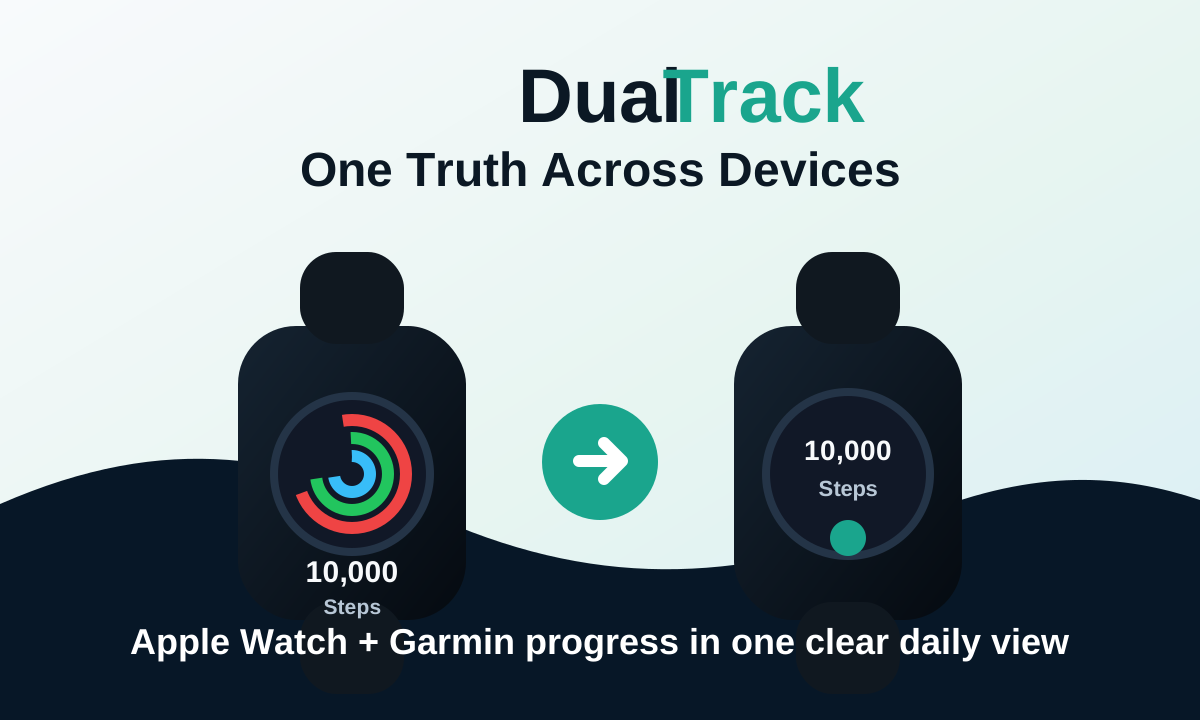
Life on the Gulf keeps you moving: walking the docks, loading the boat, chasing fish, working outside, and trying to stay healthy for the people who count on you. Dual Tracker helps Apple Watch and Garmin users see their steps, activity, and weight progress in one clear daily view. No more guessing which number is right. No more switching between apps and losing the bigger picture. Whether you are getting ready for a long day on the water, working toward better health, or simply trying to stay consistent for your family, DualTrack gives you the clarity to keep moving forward. Search Dual Tracker in the App Store and start tracking your real progress today.
Learn more →